
Skagway, Alaska
Want to see how Skagway compares to other top cities in Alaska? Explore all city regulations in Alaska. →
Skagway, AK
Very Investor Friendly
Local STR Agent
STR Regulations for Skagway, Alaska
Overview: Are short-term rentals allowed in Skagway?
Short-term rentals are explicitly recognized in Skagway’s code and are treated as taxable lodging. The Municipality defines “short-term rental” as an accessory dwelling unit or a room within a dwelling rented for compensation for transient occupancy for a period of less than nine months. Vacation rentals, bed and breakfasts in private homes, and guest rooms in a dwelling are included in that definition. In short, STRs are allowed in Skagway subject to business licensing and sales tax obligations for lodging.
How to start a short-term rental business in Skagway
- Select the property and determine whether the operation is an accessory dwelling unit, a room within a dwelling, or a guest room, ensuring it fits within the municipality’s definition of a short-term rental.
- Apply for and obtain a local business license. Ordinance No. 24-12 (SMC 5.04) established specific licensing for transient or itinerant businesses and clarifies general licensing requirements.
- Register with the municipality for sales tax. Ordinance No. 18-18 and Ordinance No. 24-12 (SMC 4.08) address lodging taxes, including taxation of overnight accommodation rentals of less than thirty consecutive days and short-term rental tax.
- Set up systems to collect lodging taxes, file returns, and maintain records. Ordinance No. 24-12 outlines collection, return, and enforcement duties.
- Align leases and pricing structures with the definition of short-term versus long-term rentals (nine months or more), ensuring consistent tax and compliance treatment.
- Keep the property compliant with zoning and any building or fire safety requirements that apply to the property’s current classification and intended use.
- Monitor updates to SMC titles 4 and 5 for changes to tax definitions, rates, licensing requirements, or enforcement.
Required documents, permits, licenses, and guidelines
- Skagway Borough business license (general business license; transient or itinerant business licensing may apply under SMC 5.04).
- Sales tax registration for lodging (SMC 4.08).
- Evidence of property ownership or authorization to operate the STR (lease or property management agreement, if applicable).
- Standard lease/rental agreement template with language reflecting short-term rental status and applicable taxes.
- Internal recordkeeping for booking revenue, taxes collected, exemptions, and returns (SMC 4.08.100).
- Compliance records to facilitate investigative procedures (SMC 4.08.130).
Specific regulations for short-term rentals (city and state)
- Definition and scope: Short-term rentals are defined as a single accessory dwelling unit, or a room within a dwelling, rented by or on behalf of the owner for transient occupancy for a period of less than nine months. Vacation rentals, bed and breakfasts in private homes, and guest rooms are included.
- Tax treatment and collection:
- Lodging and STRs are subject to Skagway’s sales tax regime; the code explicitly addresses taxation of overnight accommodation rentals of less than thirty consecutive days (Ord. 18-18) and governs lodging taxes in SMC 4.08 (Ord. 24-12).
- Ordinance No. 24-12 updated definitions for digital and marketplace sales and clarified the taxability of tour product sales, but the core obligations for lodging remain under SMC 4.08 with standard collection, return, and enforcement provisions.
- Business licensing:
- Local business licenses are required; Ordinance No. 24-12 added SMC 5.04.040, specifically creating transient or itinerant business licensing requirements, and clarified license definitions and renewal procedures (SMC 5.04.010, .020, .030).
- Sales tax considerations:
- Ordinance No. 24-12 amended provisions governing levy, rate, exemptions, returns, and collection enforcement in SMC 4.08. While the short-term rental lodging tax treatment is clear, the effective combined rates and exemptions should be verified directly in SMC 4.08 prior to setting pricing.
- Enforcement:
- SMC 4.08 includes investigative procedures, assessments for failure to make returns, enforcement, and bond provisions. Operators should maintain accurate records and timely filings.
- Long-term vs. short-term:
- Long-term residential rentals are defined as nine months or more, and those rentals are exempt from sales tax under the municipality’s sales tax framework. Short-term rentals remain taxable lodging.
Note on state-level rules: The materials provided focus on Skagway’s municipal code and do not specify Alaska state-level lodging or STR regulations beyond the municipal sales tax regime.
Contact information for local authority
- Municipality of Skagway Borough
- Website: www.skagway.org
- Business licensing and tax questions are administered under SMC titles 4 and 5. For direct staff contact, use the Municipality of Skagway website portal listed above.
Source pages
- Ordinance No. 18-18 (short-term rental tax clarification): skagway.municipal.codes/enactments/Ord18-18
- Ordinance No. 24-12 (sales tax and business license updates, including transient or itinerant licensing): skagway.municipal.codes/enactments/Ord24-12
- Chilkat Valley News article (context on long-term rental tax exemption and STR definition): www.chilkatvalleynews.com/2018/09/13/sales-tax-now-exempt-for-renters/
Skagway
Market Saturation Score
Photos of Skagway


Overview of Skagway
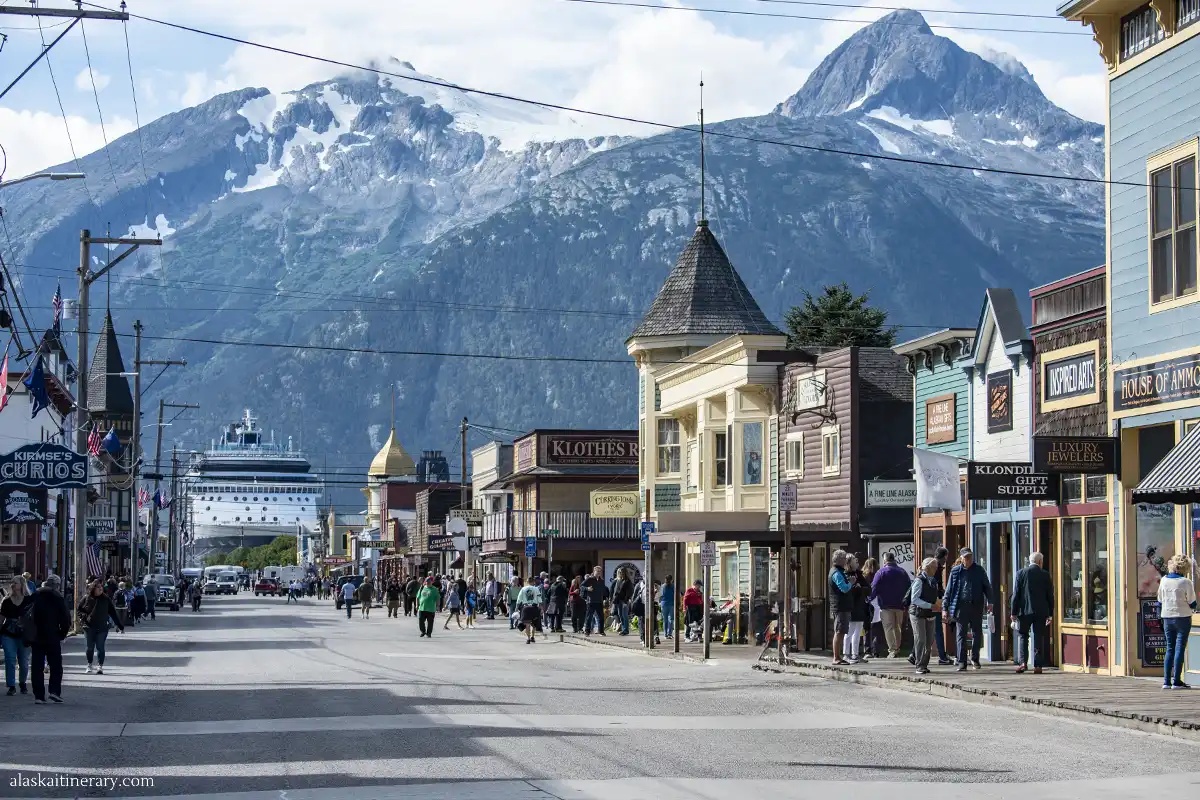
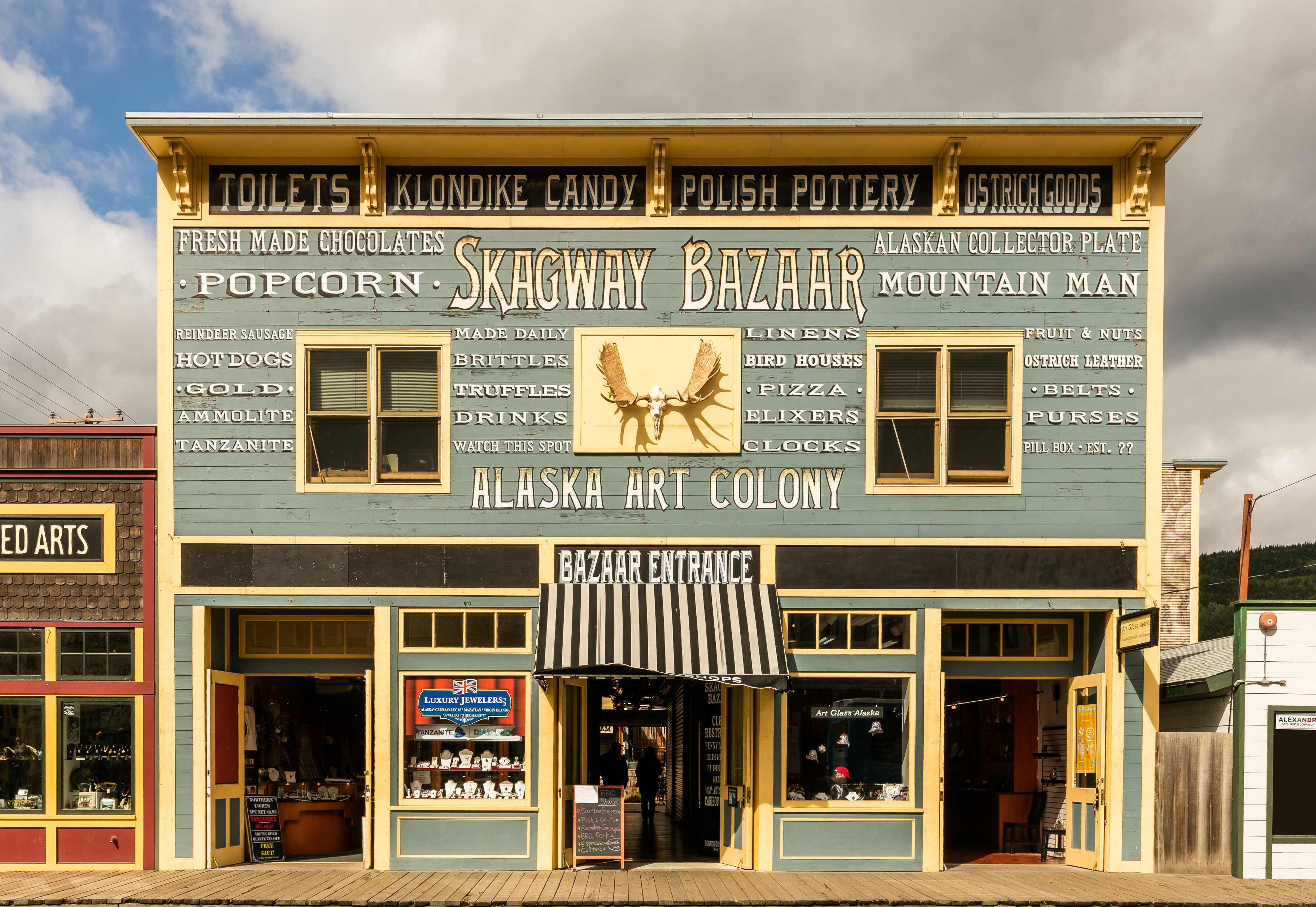
The Municipality and Borough of Skagway is a first-class borough in Alaska on the Alaska Panhandle. As of the 2020 census, the population was 1,240, up from 968 in 2010. The population doubles in the summer tourist season in order to deal with more than 1,000,000 visitors each year. Incorporated as a borough on June 25, 2007, it was previously a city (urban Skagway located at 59°27′30″N 135°18′50″W) in the Skagway-Yakutat-Angoon Census Area (now the Hoonah–Angoon Census Area, Alaska). The most populated community is the census-designated place of Skagway. Skagway was an important port during the Klondike Gold Rush. The White Pass and Yukon Route narrow gauge railroad, part of the area's mining past, is now in operation purely for the tourist trade and runs throughout the summer months. The port of Skagway is a popular stop for cruise ships, and the tourist trade is a big part of the business of Skagway. Skagway is also part of the setting for Jack London's book The Call of the Wild, Will Hobbs's book Jason's Gold, and for Joe Haldeman's novel, Guardian. The John Wayne film North to Alaska (1960) was filmed nearby. The name Skagway (historically also spelled Skaguay) is the English divergent of sha-ka-ԍéi, a Tlingit idiom which figuratively refers to rough seas in the Taiya Inlet, which are caused by strong north winds. (See, "Etymology and the Mythical Stone Woman", below.)
Want to know if a property in Skagway is a good investment?
Enter an address to get instant revenue potential and comps.