
Buzzards Bay, Massachusetts
Want to see how Buzzards Bay compares to other top cities in Massachusetts? Explore all city regulations in Massachusetts. →
Buzzards Bay, MA
Challenging To Investors
Local STR Agent
STR Regulations for Buzzards Bay, Massachusetts
Overview: Whether Short-Term Rentals Are Allowed
- In short: Yes, short‑term rentals are allowed in Buzzards Bay, but they are tightly regulated and not permitted in all zoning districts.
- The Town of Bourne’s Zoning Bylaw regulates “Transient dwelling” uses. As of the bylaw most recently amended in October 2022, “Transient dwelling” is:
- Prohibited in R‑40 and R‑80 Residence Districts.
- Allowed in V‑B (Village Business), B‑1, and B‑2 Business Districts only by Special Permit from the Board of Appeals (SP*).
- “Hotel/Motel or similar establishments” are permitted by SPR/SP in V‑B and Business Districts. If an STR is operated in a structure more akin to a hotel/motel (e.g., multiple guest units with central management), this may be the more appropriate pathway. However, most single‑family or small multifamily STRs will be evaluated as “Transient dwelling.”
- Accessory lodging: Taking up to six lodgers/boarders in a dwelling is allowed in Residence Districts by right (Section 2220, Residential Uses), provided it remains accessory to a resident family and all Building, Health, and Zoning requirements are met.
- The Downtown District (DTD) does not explicitly list “Transient dwelling” in its Use Regulation Schedule. Where no specific listing exists, the bylaw states “All other uses” are not permitted. Accordingly, STRs as “Transient dwelling” do not currently appear to be allowed in the DTD under this bylaw. Where similar lodging uses (e.g., “Hotel/Motel or similar establishments”) are listed with SPR/SP in certain subdistricts, they may be permissible subject to SPR/SP review and DTD design standards. Investors should confirm the correct use classification and permitting path with the Planning Board before pursuing a DTD project.
Important caveat: Massachusetts state law (M.G.L. c.64G, Section 3A) prohibits municipalities from banning owner‑occupied STRs of 30 days or fewer in single‑family and two‑family homes. Town zoning must be applied consistently with that statutory protection.
How to Start a Short‑Term Rental Business in Buzzards Bay
- Step 1: Site selection and zoning feasibility
- Verify the parcel’s zoning district.
- Confirm STR viability:
- R‑40/R‑80: “Transient dwelling” prohibited; up to six lodgers/boarders allowed as-of-right accessory to a resident family.
- V‑B, B‑1, B‑2: “Transient dwelling” allowed only by Special Permit from the Board of Appeals.
- DTD: No explicit “Transient dwelling” listing; confirm whether “Hotel/Motel or similar” applies and whether SPR/SP is available in the subdistrict.
- Step 2: Use classification and permitting pathway
- If operating a single‑family or small multifamily home as an STR, pursue “Transient dwelling” with a Special Permit in eligible districts.
- If operating a larger lodging operation with multiple guest units and centralized management, evaluate “Hotel/Motel or similar” under SPR/SP where listed.
- Step 3: Special Permit (if required)
- Application to the Town Clerk; copy to the Special Permit Granting Authority (Board of Appeals).
- Public hearing and decision criteria (Section 1331) consider pedestrian/vehicular flow, safety, utilities, environmental impacts, visual compatibility, and impacts on year‑round housing supply.
- The permit typically lapses if not exercised within two years, subject to extension for good cause (Section 1333).
- Step 4: Site Plan Review – Special Permit (for commercial/mixed‑use developments)
- Required for certain commercial/industrial/retail/mixed‑use structures and site changes (Section 1233), including changes in parking, egress, utilities, drainage, lighting, or more intensive use.
- Application to the Planning Board with public hearing and decision criteria emphasizing environmental protection, design compatibility, traffic/safety, and stormwater management (Section 1238).
- Step 5: Building permit and inspections
- No building shall be erected, externally altered, or moved without a building permit (Section 1210). The Inspector of Buildings must certify zoning compliance.
- Construction plans and site plan submittals must meet bylaw requirements; as‑built site plan required before occupancy permit (Section 1238).
- Step 6: Occupancy and operation
- Obtain Certificate of Occupancy upon completion and as‑built submission.
- Maintain compliance with State Building Code, Health regulations, and local bylaws at all times.
- If applicable, register and remit Massachusetts Room Occupancy Tax and any local taxes/tolls.
Required Documents, Permits, Licenses, and Guidelines
- Zoning and use
- Zoning determination from the Building Department/Inspector of Buildings confirming the parcel’s district and allowed STR pathway.
- Special Permit (Board of Appeals)
- Application filed with Town Clerk; copy to the Board of Appeals.
- Documentation addressing decision criteria in Section 1331 (traffic/safety, utilities, environmental impacts, compatibility, year‑round housing impacts).
- Public hearing notice and abutters’ notice as required by M.G.L. c.40A.
- Site Plan – Special Permit (Planning Board), if applicable
- Nine copies of application/site plan; filing with Town Clerk and Planning Board (Section 1234).
- Required submittals include:
- Registered land surveyor and civil engineer-prepared site plans (full‑scale 24"×36" and reduced 11"×17").
- Location, boundaries, abutters list (within 300 feet).
- Existing/proposed topography (2‑foot contours), wetlands, flood areas, drainage.
- Existing/proposed structures, uses, dimensions, and elevations.
- Parking, loading, driveways, walkways, access/egress.
- Utilities (water, septic), refuse, signage.
- Landscape plan (Section 3500) and lighting plan (Section 3400).
- Architectural plans; buildings >35,000 cubic feet require architect/engineer.
- Stormwater design consistent with Massachusetts Stormwater Handbook and Bourne Subdivision Regulations.
- Traffic study if required by the Planning Board.
- Erosion control plan; as‑built site plan prior to occupancy.
- Review fees and potential outside consultant escrow (Section 1252).
- Building permit and inspections
- Three prints of lot plan to scale, showing boundaries, dimensions, location/size of structures, existing/proposed streets (Section 1210).
- Compliance with State Building Code and all other permits/certifications.
- Professional inspection for projects meeting Section 1251 thresholds (registered architect/engineer oversight).
- Operating compliance
- State: Room Occupancy Tax registration and remittance; local transient accommodations tax if applicable.
- Safety: Compliance with State Building Code, Fire, and Life Safety requirements (including egress, alarm, and emergency access standards appropriate to occupancy).
- Health: Compliance with Board of Health and wastewater regulations.
- Enforcement documentation
- Maintenance of Special Permit/site plan conditions; readiness for non‑criminal violation procedures (Sections 1281–1283) and potential penalties (Section 1270: $50 per offense; each day constitutes a separate offense).
Specific Regulations for STRs (City/Town, County, and State)
- Town of Bourne (Buzzards Bay) zoning
- STRs as “Transient dwelling”:
- Prohibited in R‑40 and R‑80 Residence Districts.
- Allowed in V‑B, B‑1, B‑2 Business Districts only by Special Permit (SP*).
- “Hotel/Motel or similar establishments”:
- Permitted by SPR/SP in V‑B and Business Districts (subject to DTD subdistrict rules where applicable).
- Accessory lodging:
- Up to six lodgers/boarders per dwelling allowed by right in Residence Districts (Section 2220), accessory to resident family.
- DTD (Downtown Buzzards Bay):
- No explicit “Transient dwelling” listing; “All other uses” not permitted. Investors should confirm whether “Hotel/Motel or similar” applies in the specific subdistrict and proceed via SPR/SP if listed.
- Site Plan – Special Permit thresholds:
- Required for commercial/mixed‑use development changes including parking, egress, utilities, lighting, or more intensive use; or any commercial/industrial/retail/mixed‑use structure (Section 1233).
- Decision criteria (Special Permit):
- Pedestrian/vehicular flow and safety; utilities; environmental impact; nearby premises; visual compatibility; Water Resource District cumulative impacts; year‑round housing needs (Section 1331).
- Lapse and extensions:
- Special Permit rights must be exercised within two years (Section 1333). Site Plan – Special Permit approvals lapse within two years without substantial completion (Section 1242).
- Non‑criminal violations and penalties:
- Warning (20 days), then notice to appear before Court; $50 per offense; each day a violation continues is a separate offense (Sections 1281–1283; 1270).
- STRs as “Transient dwelling”:
- Barnstable County/Regional context
- Cape Cod Commission (CCC) oversight applies where a development is deemed a Development of Regional Impact (DRI) or where the Town enters into a Development Agreement. Large lodging projects (or multi‑parcel mixed‑use redevelopments) in Buzzards Bay may trigger CCC review. The bylaw details procedures and criteria for Development Agreements (Sections 1610–1690). Consult CCC early if your project scale or impacts suggest regional significance.
- Massachusetts state requirements
- M.G.L. c.64G, Section 3A: Municipalities may not prohibit owner‑occupied STRs of 30 days or fewer in single‑family and two‑family homes. Zoning requirements still apply and may impose conditions/permits.
- State Building Code: All structures must meet Massachusetts State Building Code; projects may require plan review, inspections, and Life Safety/Fire code compliance.
- Room Occupancy Tax: State 5.7% tax applies to STRs; registration and remittance required (Massachusetts Department of Revenue).
- Local taxes: Municipalities may impose additional local room occupancy taxes; confirm current Bourne/Buzzards Bay rate with the Treasurer/Collector’s office.
Key Contacts and Authorities (Phone, Email, Website where available)
- Town of Bourne main contacts
- Bourne Town Hall: 24 Perry Avenue, Buzzards Bay, MA 02532
- Phone: 508‑759‑0600
- Website: www.townofbourne.com/
- Inspector of Buildings/Zoning Enforcement
- Administers building permits, certifies zoning compliance (Sections 1210–1230).
- Phone: 508‑759‑0600 (Ask for Building Department/Inspector of Buildings)
- Board of Appeals (Special Permit Granting Authority for “Transient dwelling” SP* in V‑B, B‑1, B‑2)
- Special Permit applications are filed with the Town Clerk, with copies to the Board of Appeals (Section 1330).
- Phone: 508‑759‑0600 (Ask for Board of Appeals/Town Clerk)
- Planning Board (Site Plan – Special Permit SPR/SP)
- Handles site plan review and certain SPR/SP lodging uses (Section 1232).
- Phone: 508‑759‑0600 (Ask for Planning Board)
- Town Clerk (Special Permit filing office)
- Phone: 508‑759‑0600
- Board of Health (Health compliance, septic/wastewater, nuisance)
- Phone: 508‑759‑0600 (Ask for Board of Health)
- Treasurer/Collector’s Office (Room Occupancy Tax and local tax matters)
- Phone: 508‑759‑0600
- Cape Cod Commission (regional review and Development Agreements)
- Phone: 508‑362‑3828
- Website: www.capecodcommission.gov/
Links to Source Pages (Official Documents)
- Town of Bourne Zoning Bylaw (October 2022):
Practical Investor Notes
- Zoning is the gatekeeper. Start with a zoning determination to avoid chasing a non‑permitted use. In Residence Districts, “Transient dwelling” is prohibited; consider accessory lodging (up to six lodgers/boarders) if owner‑occupied.
- In Village Business and Business Districts, the Special Permit pathway is essential; expect a public hearing and detailed criteria review. Budget time for site plan review if the project involves structural changes, parking/egress modifications, or mixed‑use intensity.
- For Downtown Buzzards Bay projects, the absence of an explicit “Transient dwelling” listing means you must confirm whether a hotel/motel pathway (SPR/SP) applies in your subdistrict and whether your proposed operation fits that category.
- Compliance is ongoing. Non‑criminal enforcement and penalties are straightforward—avoid violations by maintaining conditions, keeping permits current, and passing inspections.
- Regional review can add timelines. If
Buzzards Bay
Market Saturation Score
Photos of Buzzards Bay

Overview of Buzzards Bay
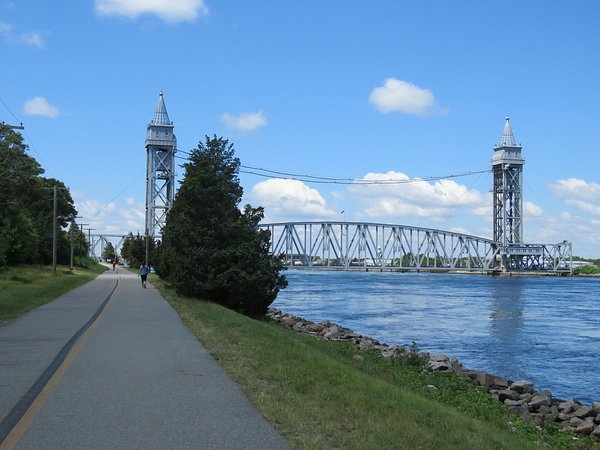
Buzzards Bay is a census-designated place (CDP) in the town of Bourne in Barnstable County, Massachusetts. The population was 3,859 at the 2010 census. It is the most populous of the five CDPs in Bourne.
Want to know if a property in Buzzards Bay is a good investment?
Enter an address to get instant revenue potential and comps.