
Imperial, Nebraska
Want to see how Imperial compares to other top cities in Nebraska? Explore all city regulations in Nebraska. →
Imperial, NE
Challenging To Investors
Local STR Agent
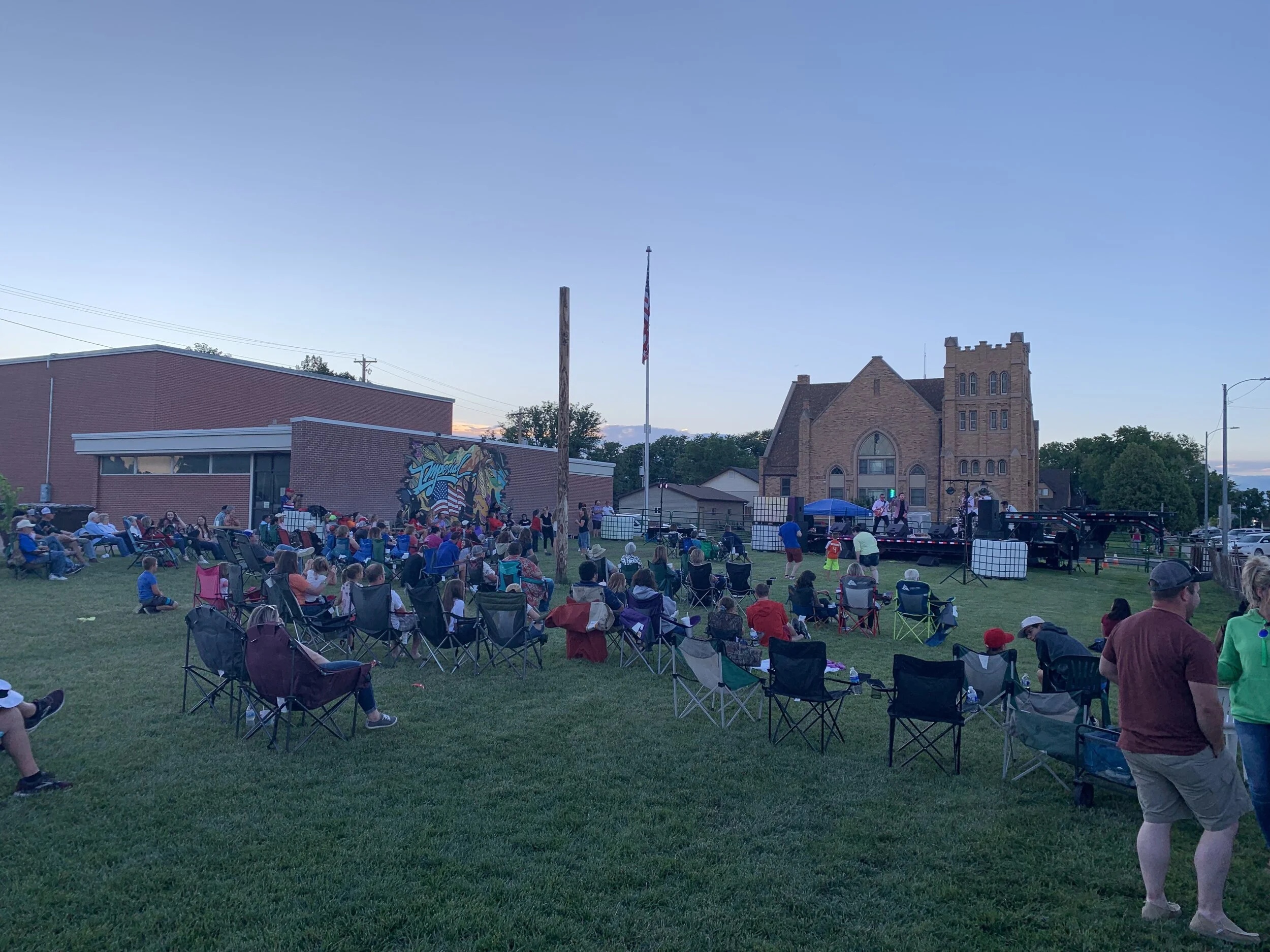
STR Regulations for Imperial, Nebraska
Overview: STRs are Explicitly Allowed as Conditional Uses in Specific Residential Districts
Yes, short-term rentals are explicitly permitted in the City of Imperial, Nebraska, but only as a "Conditional Use" in the following zoning districts:
- R-1 Single-Family and Two-Family Residential District (Section 502.C.10)
- LLR Large Lot Residential District (Section 503.C.11)
- R-2 Multi-Family Residential District (Section 504.C.5)
This means an STR operator must obtain a Conditional Use Permit (CUP) from the City Council after an application process and public review. The property must be located within the boundaries of one of these three districts.
How to Start a Short-Term Rental Business in Imperial, NE
- Verify Zoning Compliance: Confirm that your property is located within the R-1, LLR, or R-2 zoning districts. If it is not, an STR is not legally permitted.
- Obtain a Conditional Use Permit (CUP): This is the mandatory first step. The process, as outlined in the regulations, involves:
- Application: Submit a formal application for a Conditional Use Permit to the appropriate City authority (likely the Zoning Administrator or City Clerk, as per Section 1502).
- Review: The application will be reviewed by the Planning Commission and then acted upon by the City Council (Section 1304 and 1405).
- Public Hearing: A public hearing will likely be held as part of this process.
- Approval: The City Council has the discretion to approve or deny the permit. Conditions may be attached to the permit to ensure compatibility with the surrounding neighborhood.
- Obtain a Building Permit (Section 1503): If the STR use involves any construction, alteration, or significant change to the property's physical structure, a Building Permit must be obtained from the City.
- Obtain an Occupancy Certificate (Section 1505): This is critical. An official Occupancy Certificate, issued by the City, is required before the STR can be legally occupied. The City will inspect the completed project to ensure it conforms to the building code and zoning ordinance. The application for this certificate is detailed in Section 1506, and its issuance is covered in Section 1507.
Required Documents, Permits, Licenses, and Guidelines
- Conditional Use Permit (CUP): The primary legal document authorizing the STR use.
- Building Permit: Required for any construction or significant alteration.
- Occupancy Certificate: Legally required before any rental can commence.
- Compliance with State Law: The operator must comply with state statutes governing lodging establishments, including health and safety standards.
- Tax Registration: The operator must comply with state tax requirements, including potential sales tax or local occupation tax on the rental income (as defined in Section 404.144).
Specific Regulations for Short-Term Rentals
The core definition and regulatory framework for STRs is provided in Section 404.144:
- Definition: An STR is defined as a residential property (including single-family homes, condominiums, etc.) rented wholly or partly for a fee for a period not longer than thirty (30) consecutive days.
- City Authority to Tax: The City reserves the right to impose a sales tax or an occupation tax on STRs.
- Density Limitation: The City retains the right to limit the density of STRs in particular neighborhoods. This means a CUP could be denied on the basis of too many existing STRs in a concentrated area.
- Prohibited Uses: The City can only limit or prohibit an STR if it is used for a purpose that is already illegal under state law, specifically: housing sex offenders, operating a sober living home, selling illegal drugs, selling alcohol without a license, or operating a sexually oriented business.
- Tax Collection by Online Platforms: The regulations detail a state-level framework for how online hosting platforms (like Airbnb, VRBO) can enter into agreements with the State Tax Commissioner to collect and remit sales and other applicable taxes on behalf of the property owner, thereby waiving the owner's direct tax collection obligation for those transactions facilitated through the platform.
Additionally, as a Conditional Use, the STR must comply with all underlying zoning district regulations for the district in which it is located (e.g., R-1, LLR, R-2), including:
- Setbacks: Minimum distances from property lines (e.g., R-1 requires a 25-foot front yard, 6-foot side yard, and 30-foot rear yard per Section 502.G).
- Building Coverage and Height Limits: Respect the maximum building coverage and structure height for the district (e.g., R-1 has a 35% building coverage limit and 35-foot height limit per Sections 502.E and F).
- Off-Street Parking: Comply with the parking regulations in Article 7. STRs will typically require parking for guests.
Important Note: The zoning document contains an extensive list of definitions, but there are no additional city-specific regulations beyond those in the zoning ordinance and the general state statutes it references. If there is a separate city ordinance specifically for STRs, it was not provided in the content.
Contact Information for Local Authority
Based on the administrative structure outlined in the regulations:
- City Clerk's Office: For initial inquiries about permits, applications, and the permit process.
- Address: City of Imperial, P.O. Box 279, Imperial, NE 69033.
- Zoning Administrator: The person responsible for administering the zoning regulations. Contact the City Clerk's office for the name and contact details of this individual.
- City Council: The governing body that makes the final decision on Conditional Use Permits. Contact information can be obtained through the City Clerk.
Disclaimer: Direct phone numbers and email addresses were not provided in the content. Investors must contact the City Clerk's Office to obtain the specific contact details for the City Council, Zoning Administrator, and other relevant staff.
Links to Source Pages
The primary source for all information provided is the official zoning document:
This link leads directly to the PDF file provided in your initial query, which is the authoritative source for all zoning, permit, and STR-related regulations for the City of Imperial.
Imperial
Market Saturation Score
Photos of Imperial

Overview of Imperial
Imperial is a city in Chase County, Nebraska, United States. The population was 2,071 at the 2010 census. It is the county seat of Chase County.
Want to know if a property in Imperial is a good investment?
Enter an address to get instant revenue potential and comps.