
Princeton, New Jersey
Want to see how Princeton compares to other top cities in New Jersey? Explore all city regulations in New Jersey. →
Princeton, NJ
Generally Investor Friendly
Local STR Agent
STR Regulations for Princeton, New Jersey
Overview: Are Short-Term Rentals Allowed in Princeton, NJ?
YES, short-term rentals are currently allowed in Princeton, NJ, but significant regulatory changes are underway. As of October 2025, Princeton is developing a comprehensive short-term rental ordinance that is expected to be implemented by early 2026. Currently, there are an estimated 125-150 short-term rental properties operating in town without formal registration requirements.
The proposed regulations aim to balance four primary objectives:
- Ensuring public safety through inspections and clear requirements
- Preserving neighborhood character
- Maintaining housing availability for long-term residents
- Balancing the interests of property owners, visitors, and the broader community
How to Start a Short-Term Rental Business in Princeton
Current Market Conditions (October 2025)
Before the new ordinance takes effect in early 2026, you can operate a short-term rental without municipal permits. However, this window is closing rapidly. The municipality is moving quickly to implement regulations after years of discussion.
Post-Ordinance Requirements (Early 2026)
Once the ordinance takes effect, starting a short-term rental business will require:
- Permit Application Process: Similar to the municipality's existing long-term rental process
- Registration: Through the municipality's software platform (OpenGov)
- Safety Inspections: Required before operation
- Annual Renewals: Mandatory for continued operation
- Compliance Monitoring: Using Deckard platform for tracking
Principal Residence Requirements
Princeton is considering four options for principal residence requirements:
- Option 1: Require all STRs to be owner's principal residence immediately upon passage
- Option 2: 12-to-24-month phase-out period for existing non-principal residence rentals
- Option 3: Allow existing non-principal residence STRs to continue until property sale/transfer (current draft preference)
- Option 4: No principal residence requirement (generates highest tax revenue but contradicts stated goals)
Required Documents, Permits, Licenses, and Guidelines
Current Requirements (Pre-Ordinance)
- No municipal permits currently required
- Standard business licensing (if applicable)
- Property insurance
- Zoning compliance verification
Post-Ordinance Requirements (Early 2026)
Permits and Registration:
- Short-term rental permit application
- Registration fees (amount to be determined)
- Proof of property ownership or lease authorization
- Identification documents (driver's license or voter registration for principal residence verification)
Safety Inspections:
- Initial safety inspection before operation
- Fire safety compliance
- Building code compliance
- Health department approval (if applicable)
Ongoing Compliance:
- Annual permit renewals
- Continued safety inspections as required
- Tax payment compliance
Software and Monitoring:
- Registration through OpenGov platform (municipal system)
- Monitoring through Deckard platform (approximate cost $5,000 annually to municipality)
Specific Regulations for Short-Term Rentals
Municipal Regulations (Princeton)
Taxation:
- 3% occupancy tax on short-term rentals (as permitted under state law enacted in 2018)
- Estimated annual revenue generation: $70,000-$200,000 for municipality
- Based on 79% occupancy rate projections (actual rates may vary)
Principal Residence Policy:
- Four policy options under consideration (see above)
- Current draft favors Option 3, allowing existing non-principal residence STRs to continue until property transfer
Registration and Monitoring:
- Formal registration system to replace current informal monitoring
- Software-based compliance tracking
- Regular enforcement through monitoring platforms
State Regulations (New Jersey)
Occupancy Tax Authority:
- State law enacted in 2018 permits municipalities to impose 3% occupancy tax on short-term rentals
- Princeton is exercising this authority
County Regulations (Mercer County)
- No specific county-level short-term rental regulations identified in provided sources
Contact Information for Local Authority
Princeton Municipal Contacts
Municipal Administrator and Health Officer:
- Name: Jeff Grosser
- Department: Municipal Administration/Health Department
Zoning Department:
- Phone: 609-921-1359
- Function: Zoning approval required for room and flat rentals
Bureau of Rental Housing Inspections:
- Phone: 609-454-4756
- Function: Registration and inspection oversight
Princeton Police Department (for animal control and dispatch):
- Phone: 609-921-2100
- Address: Police Dispatch Center
Mailing Address for Rental Inspections:
- Princeton
- Rental Housing Inspections
- One Monument Drive
- Princeton, NJ 08540
Municipal Clerk's Office:
- Phone: 609-921-1359
- Address: 400 Witherspoon Street
- Hours: Monday-Friday, 9 am - 5 pm
Emergency Contacts
Police Department:
- Emergency: 911
- Non-Emergency: 609-921-2100
Public Works Emergency:
- Phone: 609-688-2566
- Hours: 9 am - 3 pm
Links to Source Pages
Primary Source - Princeton STR Regulation News:
Princeton Municipal Website - Main Portal:
Rental Housing Information:
- Princeton FAQ - Bureau of Rental Housing Inspections (see relevant sections on rental properties and inspections)
Important Note for Investors: The regulatory landscape for short-term rentals in Princeton is rapidly evolving. While STRs are currently permitted without formal registration, the comprehensive ordinance expected in early 2026 will significantly change requirements. Investors should monitor municipal communications closely and consider the principal residence requirement options when making investment decisions. The 3% occupancy tax and registration requirements will impact profitability, while the principal residence policy will determine market access for non-owner-occupied properties.
Princeton
Market Saturation Score
Photos of Princeton


Overview of Princeton
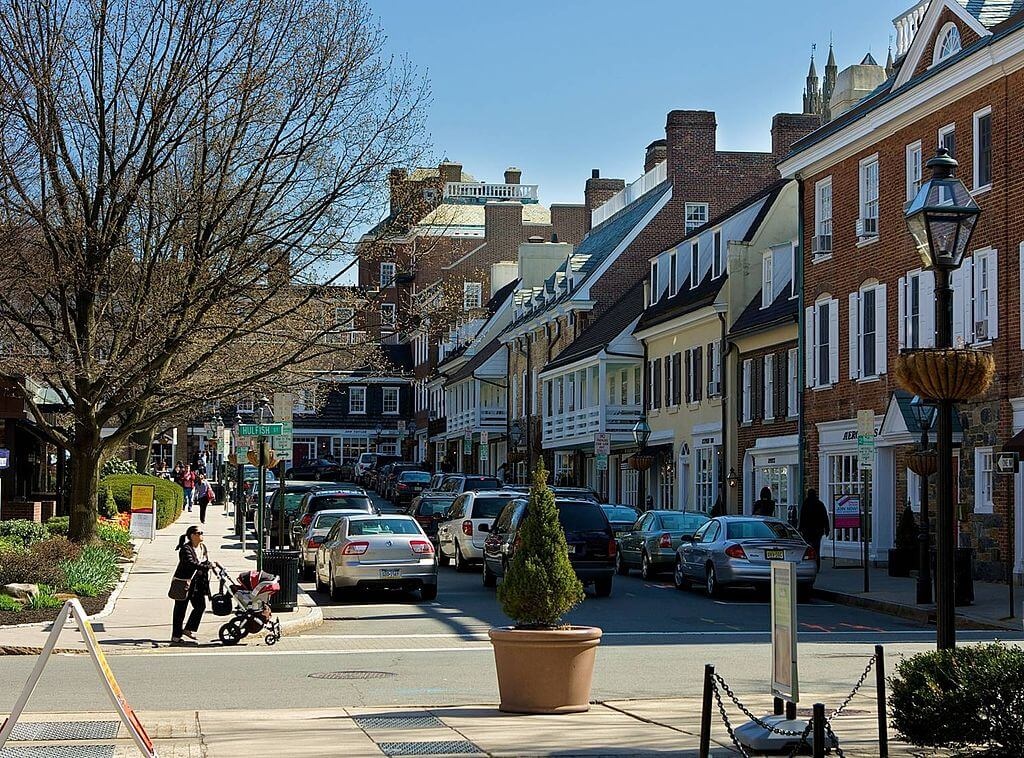
Princeton is a municipality with a borough form of government in Mercer County, in the U.S. state of New Jersey. It was established on January 1, 2013, through the consolidation of the Borough of Princeton and Princeton Township, both of which are now defunct. As of the 2020 United States census, the borough's population was 30,681, an increase of 2,109 (+7.4%) from the 2010 census combined count of 28,572. In the 2000 census, the two communities had a total population of 30,230, with 14,203 residents in the borough and 16,027 in the township.Princeton was founded before the American Revolutionary War. The borough is the home of Princeton University, which bears its name and moved to the community in 1756 from the educational institution's previous location in Newark. Although its association with the university is primarily what makes Princeton a college town, other important institutions in the area include the Institute for Advanced Study, Princeton Plasma Physics Laboratory, Princeton Theological Seminary, Opinion Research Corporation, Bristol-Myers Squibb, Siemens Corporate Research, SRI International, FMC Corporation, The Robert Wood Johnson Foundation, Amrep, Church and Dwight, Berlitz International, and Dow Jones & Company. Princeton is roughly equidistant from New York City and Philadelphia. It is close to many major highways that serve both cities (e.g., Interstate 95 and U.S. Route 1), and receives major television and radio broadcasts from each. It is also close to Trenton, New Jersey's capital city, New Brunswick and Edison. The New Jersey governor's official residence has been in Princeton since 1945, when Morven in what was then Princeton Borough became the first governor's mansion. In 1982, it was replaced by the larger Drumthwacket, a colonial mansion located in the former township, but not all have actually lived in these houses. Morven became a museum property of the New Jersey Historical Society.Princeton was ranked 15th of the top 100 towns in the United States to Live In by Money magazine in 2005.Throughout much of its history, the community was composed of two separate municipalities: a township and a borough. The central borough was completely surrounded by the township. The borough seceded from the township in 1894 in a dispute over school taxes; the two municipalities later formed the Princeton Public Schools, and some other public services were conducted together before they were reunited into a single Princeton in January 2013. Princeton Borough contained Nassau Street, the main commercial street, most of the university campus, and incorporated most of the urban area until the postwar suburbanization. The borough and township had roughly equal populations.
Want to know if a property in Princeton is a good investment?
Enter an address to get instant revenue potential and comps.