
Sussex, New Jersey
Want to see how Sussex compares to other top cities in New Jersey? Explore all city regulations in New Jersey. →
Sussex, NJ
Challenging To Investors
Local STR Agent
STR Regulations for Sussex, New Jersey
Note on scope: This guide focuses on Sussex, NJ — the borough in Sussex County, New Jersey. It draws on nearby Sussex County, NJ municipal ordinances (Hampton Township; Vernon Township) and state-level context where available, since the provided documents do not include Sussex Borough–specific STR regulations. The document “Sussex County Lodging Tax Ordinance” found in your search results actually pertains to Sussex County, Delaware (not New Jersey) and does not apply to New Jersey.
Overview: Are short-term rentals allowed in Sussex, NJ (the borough)?
- Allowed: The documents provided do not contain a Sussex Borough–specific ban or permit system. This typically means short-term rentals are not categorically prohibited at the borough level in the provided materials, but investors must verify.
- Due diligence: Because New Jersey municipalities have broad authority over STRs, Sussex Borough may have adopted its own ordinance after the provided documents’ dates. Check with the borough clerk, zoning office, and fire prevention before listing or operating.
- Nearby examples: In Sussex County, NJ:
- Hampton Township prohibits STRs for fewer than 150 consecutive days (with narrow exceptions for owner’s housekeeping unit and guests).
- Vernon Township allows STRs (≤30 consecutive days, up to 180 days total per calendar year) subject to an annual permit, inspection, and compliance program.
- Bottom line: Sussex Borough may permit STRs with conditions, ban them entirely, or have no ordinance yet. Confirm locally before committing capital.
How to start a short-term rental business in Sussex, NJ
- Confirm zoning and land use
- Contact the Sussex Borough Zoning/Planning Department to confirm STRs are a permitted use at your property, and whether any special use or conditional use approvals are required. Even where allowed, many municipalities limit STRs to owner-occupied homes or certain residential districts.
- Secure the right to operate
- If the property is mortgaged or held within an HOA or condo association, obtain written permission. Lending and association covenants may restrict STRs even where municipal law allows them.
- Obtain required permits and clear inspections
- Many NJ municipalities require:
- An STR permit (often through the Fire Prevention Bureau or Building Department).
- Annual fire safety inspection and, in some towns, a rental Certificate of Occupancy or biannual inspection.
- Proof of liability insurance (commonly $500,000 minimum).
- Example thresholds (for context only): Vernon, NJ requires permits for rentals ≤30 consecutive days and ≤180 days/year, with an initial $350 fee and annual renewal.
- Many NJ municipalities require:
- Meet health, safety, and posting requirements
- Install required safety equipment (smoke/CO detectors; fire extinguishers; egress; posted occupancy limits).
- Maintain trash/recycling compliance; designate required parking; post emergency contacts and STR rules inside the unit.
- Register and comply with taxes
- Register as a business with the New Jersey Division of Revenue and Enterprise Services (NJ.gov) and obtain a Business Registration Number (NJ TAA number), even if you expect no sales tax is owed, because transient occupancy may create tax obligations depending on state and local rules.
- Collect/remit any local taxes or fees if Sussex Borough or the county adopts one (e.g., a local lodging tax). Confirm the borough’s policy.
- Prepare listing, agent, and guest procedures
- Pre-qualify guests (e.g., minimum age).
- Publish the borough’s required disclosures/permit numbers (if applicable) in all ads.
- Provide 24/7 contact coverage for the responsible party/agent.
- Build compliance into your operations
- Implement guest screening and house rules; provide welcome information; monitor for noise, trash, and parking.
- Maintain records (guest ledger, communications, inspections) for at least the term of the permit/renewal period.
- Renew annually or as required
- Many municipalities require annual renewal, fee payment, and re-inspection.
Required documents, permits, licenses, and guidelines Based on state authority and nearby Sussex County, NJ ordinances, expect to provide:
- Business registration
- NJ Division of Revenue registration and NJ Taxpayer (TAA) number.
- STR permit (if applicable)
- Application with owner identity and principal residence verification.
- Property manager/agent contact information (7/24 availability).
- Site plan/floor plan; on-site parking plan (e.g., one space per bedroom).
- Proof of ownership; general liability insurance ($500,000+ typical).
- Water testing for private wells (if applicable) and any local hazard disclosures.
- Inspections/certificates
- Fire safety and property maintenance inspections; annual or biannual schedule.
- Rental Certificate of Occupancy where required.
- Compliance attestations
- Zoning compliance; tax clearance; absence of permit revocations; agreement to comply with noise, trash, parking, and occupancy rules.
- Operational documents
- House rules, trash/recycling calendar, emergency contact list, and posted permit number/requirements inside the unit.
Regulations applicable in Sussex, NJ and nearby Sussex County, NJ
- State of New Jersey
- New Jersey municipalities are expressly authorized to regulate short-term rentals of dwelling units, including those rented for less than 175 consecutive days for residential purposes. Municipalities may adopt rules addressing occupancy, safety, advertising, nuisance, and density. Investors must comply with both state enabling statutes and local ordinances.
- Sussex Borough (no ordinance provided in your documents)
- Confirm whether Sussex Borough has adopted an STR ordinance (permit, fee, inspection, advertising disclosure, occupancy limits, and any ban). If not explicitly regulated, the borough may still enforce general zoning, building, fire, and nuisance rules.
- Nearby municipalities for context
- Hampton Township (Sussex County, NJ)
- Short-term rentals are prohibited for less than 150 consecutive days (no registration program). Narrow exceptions apply for the owner’s housekeeping unit and guests without consideration. Advertising is also prohibited if it violates the 150-day rule.
- Enforcement by code enforcement/health official/construction official; penalties under general ordinance provisions.
- Vernon Township (Sussex County, NJ)
- STRs allowed for ≤30 consecutive days, up to 180 days total per calendar year, subject to an annual STR permit and rental Certificate of Occupancy.
- Requirements include: application to Fire Prevention; $350 registration fee; biannual inspections; $500,000 general liability insurance; agent and responsible party identification; posted rules; 24/7 response availability; advertising must include permit number; violations can result in fines ($250–$500/day) and permit revocation.
- Hampton Township (Sussex County, NJ)
Local authority contacts for Sussex, NJ (Sussex Borough) Because the provided documents do not include Sussex Borough’s contact details, reach out directly:
- Sussex Borough Clerk and Zoning/Building Department
- Phone, email, and website: Obtain current contact information from the borough’s official website (municipal directory) or the Sussex County (NJ) municipal directory.
- Typical departments to contact: Clerk’s Office, Zoning/Planning, Fire Prevention/Building, and Tax Collector.
- For state-level guidance
- NJ Division of Revenue and Enterprise Services
- Phone: 609-292-9292
- Website: www.nj.gov/treasury/revenue/
- NJ Division of Revenue and Enterprise Services
Links to source pages (where available)
- Hampton Township, Sussex County, NJ – Ordinance #2021-06 (short-term rental prohibition, <150 days): www.hamptontownshipnj.info/DocumentCenter/View/510/2021-06-Adopted-on-May-25-2021-an-Ordinance-to-Amend-the-Revised-General-Ordinances-of-the-Township-of-Hampton-County-of-Sussex-State-of-New-Jersey-
- Vernon Township, Sussex County, NJ – Ordinance No. 20-04 (Short-Term Rentals, permitting and operational rules): www.vernontwp.com/index.php/articles/ordinances/2020-ordinances/ordinance-no-20-4
Important caveats
- Sussex Borough STR rules may differ materially from the examples above. Always obtain borough-specific confirmation before listing.
- The “Sussex County” document in your results is Sussex County, Delaware; it does not apply to Sussex, NJ.
- New Jersey imposes no statewide “registration” for STRs; local rules vary widely. Check both municipal code and county code for Sussex, NJ to ensure you have the complete picture.
Sussex
Market Saturation Score
Photos of Sussex


Overview of Sussex
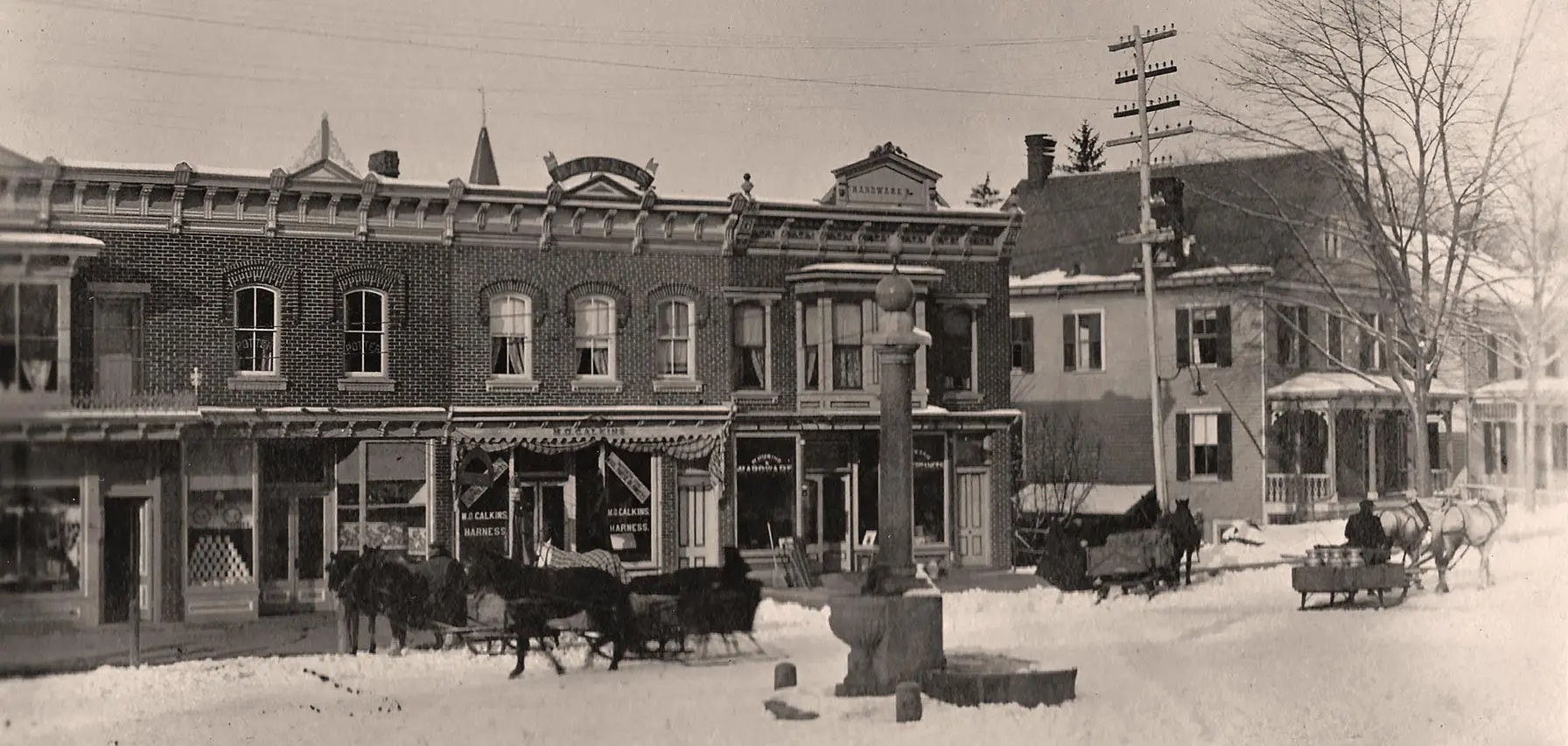
Sussex is a borough in Sussex County, in the U.S. state of New Jersey. As of the 2020 United States census, the borough's population was 2,024, a decrease of 106 (−5.0%) from the 2010 census count of 2,130, which in turn reflected a decline of 15 (−0.7%) from the 2,145 counted in the 2000 census.Sussex was incorporated as a borough by an act of the New Jersey Legislature on October 14, 1891, as Deckertown, from portions of Wantage Township. The borough's original name was for settler Peter Decker. The borough was renamed Sussex on March 2, 1902. The county and borough are named for the historic county of Sussex in England.A joint commission of residents of both Sussex and Wantage had recommended that the two communities should be consolidated to form what would be called the Township of Sussex-Wantage, which would operate within the Faulkner Act under the council-manager form of government, with a mayor and a six-member township council, and that voters in both municipalities should approve a referendum to be held on November 3, 2009. The committee noted that the two municipalities share common issues, schools, library and community services and that the artificial nature of the octagonal Sussex border often made it hard to distinguish between the two. The efforts at consolidation with surrounding Wantage Township ended in November 2009 after Wantage voters rejected the merger despite support from Sussex borough residents.
Want to know if a property in Sussex is a good investment?
Enter an address to get instant revenue potential and comps.