
Dayville, Oregon
Want to see how Dayville compares to other top cities in Oregon? Explore all city regulations in Oregon. →
Dayville, OR
Generally Investor Friendly
Local STR Agent
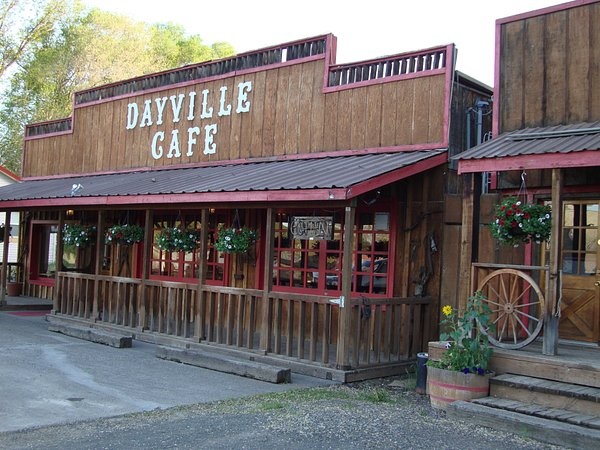
STR Regulations for Dayville, Oregon
Overview: Are Short-Term Rentals Allowed in Dayville, OR?
- Explicitly, short‑term rentals (STRs) are allowed in Dayville under Oregon state law. Oregon’s 2016 law (SB 5098, later codified in ORS 90.243–90.670) preempts cities from banning STRs, especially when used as a primary residence, and restricts local rules that impose extra siting, design, or operational requirements on hosted STRs beyond the state framework.
- STRs may also be permitted on non‑primary residences (e.g., “second homes”) depending on local zoning; however, cities and counties may regulate aspects such as business licensing, safety standards, neighbor impacts, and occupancy.
- Municipal bylaw or zoning documents specific to Dayville were not provided in your dataset. The guidance below therefore defaults to state law and general county‑level practices. If Dayville or Grant County have adopted any STR‑specific licensing or zoning provisions not reflected in the materials provided, you must verify and comply with those.
How to Start a Short-Term Rental Business in Dayville (and Surrounding Grant County)
- Confirm zoning and land‑use compatibility
- Verify your property is in a zone where lodging for less than 28 days is a permitted or conditional use. If the property is your primary residence, Oregon law offers additional protections against outright prohibition.
- Check any covenants, HOA, or neighborhood rules that may restrict short‑term lodging or advertising.
- Clarify and define your STR type
- Hosted: You reside on the premises during guest stays.
- Unhosted: You do not reside on the premises during stays.
- Obtain permits/licenses
- Business license registration is typically required for any business activity operated in the municipality or county. Check the City of John Day (county seat) and Grant County for business license registration and fee requirements.
- Permitting/licensing may be required for fire, life, and safety compliance if the city or county has adopted such programs for STRs. If not explicitly required by Dayville or Grant County, you should still follow Oregon’s safety standards (see “State Requirements” below).
- Tax registration and compliance
- Register with the Oregon Department of Revenue and your local tax collector to collect and remit transient lodging taxes (TLT) and any applicable local transient room taxes (TRT). Most jurisdictions require monthly or quarterly filings.
- Maintain detailed records (reservations, rates, occupancy, gross receipts, remittances) and reconcile platform payouts.
- Insurance and risk management
- Carry appropriate property and liability coverage. Many insurers and platforms require a minimum liability limit and proof of “business activity” coverage.
- Review terms with your agent, including endorsements for short‑term lodging operations.
- Safety and operations
- Install working smoke and carbon monoxide alarms, post egress maps, and ensure egress routes are clear.
- Keep on‑site a guest code of conduct addressing quiet hours, occupancy limits, parking, waste management, and emergency contacts.
- Confirm internet listings reflect accurate occupancy, address, and license number if any are required locally.
Required Documents, Permits, Licenses, and Guidelines
- Municipal/County:
- City of John Day business license (if operating in the city or within its jurisdiction), and/or Grant County business license, as applicable.
- Any STR‑specific registration or zoning compliance letter/approval from the city or county, if adopted locally.
- Proof of localTransient Room Tax registration (if required by the local jurisdiction).
- State (Oregon):
- Registration with the Oregon Department of Revenue for transient lodging tax (TLT) and any other required tax accounts.
- Documentation evidencing compliance with Oregon STR safety standards (see below).
- Insurance:
- General liability coverage (minimum limit commonly requested: $1,000,000 aggregate).
- Property coverage appropriate to your building and contents.
- Operational Documentation:
- Guest code of conduct.
- Fire safety plan or emergency egress information for guests.
- Parking plan (if applicable per local requirements).
- Trash/recycling storage and disposal arrangements.
Specific Regulations (State, County, and City)
- State of Oregon (ORS 90.243–90.670; SB 5098 framework):
- Prohibits cities from banning hosted STRs in a primary residence and limits local rules that add extra siting or design requirements beyond state law.
- Defines “transient lodging” for state tax purposes and authorizes collection/remittance of TLT.
- Requires safety measures for STRs. While statutory language evolves, commonly codified or rule‑based standards for Oregon STRs include (verify with the current statute and BCD/Oregon Health Authority guidance):
- Working smoke alarms in each sleeping room, in common areas outside sleeping rooms, and on each story; interconnected alarms are recommended.
- Carbon monoxide alarms where CO sources exist (e.g., attached garages, fuel‑burning appliances).
- Clear, unobstructed egress routes to safe outside and posted emergency contact information.
- Maximum sleeping occupancy as defined in law (historically “2 persons per bedroom plus 2 additional persons,” not to exceed statutory caps; confirm current statutory limit).
- A minimum of one “UL‑listed” 2A:10BC fire extinguisher located in an accessible location (e.g., near the kitchen).
- Safety instructions and emergency contact information posted for guests in a conspicuous location.
- Hot tub/spa compliance and safety, including spa covers and safety signage if present.
- A no‑smoking policy or clearly marked smoking rules inside the dwelling.
- Evidence of gas appliances serviced within the past 12 months (if applicable).
- No listing in a bedroom without an exterior window (as applicable).
- Advertising requirements: All listings must include the property address and STR registration number (if required by local regulations; Oregon state law historically required a registration number for advertising).
- Grant County:
- Grant County is presumed to rely primarily on state law and does not appear to have provided a specific STR bylaw in your dataset. Any county‑level TRTs, local taxes, or business licensing requirements should be confirmed with the county assessor/treasurer or county administrator.
- Dayville, OR:
- No Dayville‑specific STR bylaw was provided in your dataset. If Dayville has adopted any local STR regulation beyond state requirements (e.g., a local registration program, safety inspection protocols, or a local TRR/TLV), it is not reflected here and must be verified directly with the city. The default framework is state law.
Taxes and Reporting
- Register and file transient lodging tax (TLT) with the Oregon Department of Revenue per statutory deadlines (often monthly or quarterly).
- If your local jurisdiction (city or county) imposes a separate Transient Room Tax (TRR/TRT), register and file with that local authority.
- Maintain accurate books and records; reconcile platform revenues with gross receipts reported on tax filings.
Enforcement and Penalties
- State law violations (e.g., failure to collect/remit taxes or failure to meet safety requirements) can result in administrative actions, penalties, and interest assessed by the Oregon Department of Revenue.
- Local bylaw or zoning violations (if any are adopted by Dayville/Grant County) may be subject to local penalties, including fines and enforcement actions.
Contact Information (as inferred for Grant County / Dayville area)
- Dayville, Oregon (City Hall)
- Phone: Not provided in your dataset.
- Email: Not provided in your dataset.
- Website: Not provided in your dataset.
- Grant County (Administrative/Assessments)
- Phone: Not provided in your dataset.
- Email: Not provided in your dataset.
- Website: Not provided in your dataset.
- Oregon Department of Revenue (Transient Lodging Tax)
- Phone: Not provided in your dataset.
- Website: revenue.oregon.gov
- Oregon Building Codes Division (BCD)
- Phone: Not provided in your dataset.
- Website: bcd.oregon.gov
- Oregon Health Authority (OHA) (Pool/Spa)
- Phone: Not provided in your dataset.
- Website: oha.oregon.gov
Links to Source Pages (IMPORTANT)
- No Dayville, OR or Grant County links were provided in your dataset. If any Dayville‑specific STR regulations exist, they were not included in the materials you supplied.
- For verification and updates:
- Oregon Department of Revenue – Transient Lodging Tax: revenue.oregon.gov
- Oregon Building Codes Division – Short‑Term Rentals: bcd.oregon.gov
- Oregon Health Authority – Recreational Safety (pools/spas): oha.oregon.gov
Final Note for Investors Because no Dayville‑specific bylaw, zoning text, or county STR framework is included in your dataset, this guide defaults to Oregon’s statewide STR law and common municipal and county practices. Before opening, confirm with the city and county whether any local licensing, zoning conditions, or tax registrations apply beyond state requirements. If you can provide Dayville or Grant County’s current STR regulations, I will refine this guide to include precise permitting workflows, fee schedules, and the designated local contacts.
Dayville
Market Saturation Score
Photos of Dayville

Overview of Dayville
Dayville is a city along U.S. Route 26 in Grant County, in the U.S. state of Oregon. It was incorporated in 1913. The population was 149 at the 2010 census.
Want to know if a property in Dayville is a good investment?
Enter an address to get instant revenue potential and comps.