
Washington, Pennsylvania
Want to see how Washington compares to other top cities in Pennsylvania? Explore all city regulations in Pennsylvania. →
Washington, PA
Generally Investor Friendly
Local STR Agent

STR Regulations for Washington, Pennsylvania
Overview and direct answer
- Are STRs allowed in Washington, PA? Yes. Short‑term rentals (rentals for fewer than 30 days) are permitted in Washington, Pennsylvania because there is no citywide ban or licensing scheme on the books for STRs, and state law does not prohibit them. In practice, an STR is lawful so long as it complies with (a) zoning (if your municipality has any specific STR rules), (b) building, fire, and life-safety codes, (c) state tax and registration requirements, and (d) any private covenants (HOA/POA rules) if the property is in a planned community. Because Washington city and Washington County do not publish city‑specific STR rules, investors should default to Pennsylvania’s statewide rules, county‑level taxes, and general local ordinances that apply to all rental housing and lodging.
How to start an STR business in this market (step by step)
- Confirm the property’s legal status and covenants
- Verify zoning district and any municipal overlay requirements (city, borough, or township where the property sits). If you are in a planned community (HOA/POA/condo association), review the declaration, covenants, and bylaws for rental restrictions. Pennsylvania courts strictly construe restrictive covenants against the party enforcing them and often protect STRs where rentals are permitted and STRs are not expressly prohibited. See the “Planned community covenants” subsection below and the discussion of Ruffed Grouse and The Hideout cases.
- Select a clean, safe, and compliant structure
- Choose a dwelling that can meet smoke/CO detection, egress, fire safety, and local housing maintenance standards. Units offered for less than 30 days are considered “lodging establishments” under Pennsylvania law and must comply with life‑safety and guest‑protection provisions. For more detail, see “State Lodging and Housing Code” below.
- Set up a business entity and insurance
- Consider forming a Pennsylvania LLC or similar entity for liability protection. Obtain primary homeowners or landlord policy coverage plus an umbrella policy. Confirm your insurer covers short‑term rentals; many homeowner policies exclude business use, home‑sharing injuries, or vacant‑property risks. Riders or separate STR policies are common. Maintain at least the minimum liability coverage suggested by hosting platforms (commonly $1M).
- Register for taxes and set up tax collection/remittance
- State hotel occupancy tax: If you rent for fewer than 30 days, you must collect and remit Pennsylvania’s 6% hotel occupancy tax. You must register for a Sales, Use, and Hotel Occupancy Tax license with the Pennsylvania Department of Revenue if you don’t use a booking agent that remits on your behalf.
- Local hotel/room taxes: Washington County imposes a 5% county hotel tax (Washington is a fourth‑class county). Collection and administration vary by municipality and county collection authority; verify local remittance rules and whether the booking agent is collecting local taxes for you.
- Personal income tax: Report net STR income on your Pennsylvania personal income tax return (PA‑40) as business income; federal filing typically uses Schedule E or Schedule C depending on facts.
- Property tax/homestead exemption: If you claim a homestead exemption, expect it to be pro‑rated if the home is rented for part of the year; confirm your assessment office’s method and deadlines.
- Build a compliance‑friendly guest experience
- Provide clearly posted house rules, local quiet hours, parking limits, and trash/recycling instructions. Maintain guest records (name, address, phone, email, check‑in/out dates, and all occupants) for at least two years; these records can be crucial for health/safety investigations and may be required by some municipalities and by state lodging provisions.
- If you use a booking platform (Airbnb/VRBO/other)
- Confirm whether the platform acts as a “booking agent” that collects/remits state and local hotel taxes on your behalf. If not, you are responsible for registration and remittance. If you use multiple platforms or direct bookings, ensure you are capturing and remitting all taxes owed.
Required documents, permits, licenses, and guidelines (what you must have)
- Business registration and taxation
- Pennsylvania Sales, Use, and Hotel Occupancy Tax license (unless a booking agent is solely handling tax remittance).
- Compliance with Pennsylvania personal income tax reporting (PA‑40) and federal reporting (Schedule E/Schedule C; IRS Publication 527 guidance).
- Registration with your county/borough/township tax collection office for local hotel taxes, if applicable.
- For Washington County, confirm the local collection officer, rates, and filing cadence; Washington County’s hotel tax rate is 5% per state summaries.
- Housing and life safety
- Compliance with Pennsylvania’s Lodging and Housing Code for transient lodging (smoke/CO alarms, recordkeeping, guest safety, and order/maintenance). For properties in PIT/PROCAP or other 24‑hour staffed facilities, additional federal accessibility rules may apply (see “Accessibility” below).
- Zoning and municipal permits
- Verify whether your municipality has any rental registration, zoning permits, or short‑term lodging licenses. As of the latest publicly available sources, Washington, PA does not have a published, city‑specific STR licensing scheme. If your municipality later adopts one, you should expect a registration/license requirement, annual inspections, and rules on occupancy, length of stay, and signage.
- Insurance
- Primary homeowners/landlord policy and umbrella; consider a separate STR policy or rider that covers guest injury, property damage, theft, and loss of income. Confirm that coverage applies to transient rentals.
- Private covenants
- HOA/POA/condo declaration, bylaws, and rules review; ensure STRs are not prohibited and comply with any owner‑occupancy or rental caps. Pennsylvania courts require any STR ban or restriction to be expressly stated and adopted via proper legal procedures; overly broad or unpublished bans are often void.
State‑level regulations that directly affect your STR (Pennsylvania)
- Lodging and Housing Code (48 Pa.C.S. § 1311(g))
- “Lodging establishment” includes any building held out to the public as available for overnight lodging for consideration, for periods less than 30 days. This definition covers STRs. Temporary lodging applies to occupancies under 30 days (or day‑to‑day basis over 30 days). The Code imposes recordkeeping, order, and safety obligations on lodging operators.
- State hotel occupancy tax
- 6% state hotel occupancy tax applies to all transient lodging (rentals under 30 days). Booking agents must collect and remit; if you do not use a booking agent for all transactions, you must register, collect, and remit yourself.
- Personal income tax
- Pennsylvania PIT (3.07% rate for 2024–2025) applies to net STR income treated as business income. Losses may offset other income; you can carry forward unused losses.
- Property tax homestead exemption
- Homestead exemptions may be pro‑rated when the property is not the owner’s residence for a portion of the year (e.g., rented as STR). Confirm calculations and deadlines with your county assessment office.
- Municipalities Planning Code and zoning authority
- Short‑term rental regulation is primarily a local zoning matter. Municipalities may permit, condition, or prohibit STRs in certain districts. Under the Pennsylvania Supreme Court’s Slice of Life decision, purely transient commercial use of a single‑family dwelling is not a permitted use in a residential district unless the zoning ordinance expressly allows it. Some municipalities therefore restrict STRs to commercial or mixed‑use districts or require a special exception/conditional use. Monitor any local ordinance updates.
Planned community covenants and recent case law (statewide implications)
- In planned communities, HOA restrictions must be express and adopted correctly. Pennsylvania courts have struck down attempts by HOAs to ban or significantly restrict STRs where:
- The declaration permits rentals but the HOA tries to add STR prohibitions via bylaws or rules; such bylaws are void if they conflict with the declaration (The Hideout case).
- The covenants prohibit “commercial purposes” but do not expressly forbid rentals; courts have held that renting—short‑term or long‑term—can be permissible residential use, not a commercial use, and STR bans were invalidated (Ruffed Grouse case).
- Practical takeaway: If your community allows rentals generally, an STR ban is unlikely to be enforceable unless the declaration expressly prohibits short‑term rentals and proper amendment procedures (often unanimous or supermajority consent) are followed.
City/county‑specific rules and taxes (Washington, PA; Washington County)
- City of Washington (municipality)
- There is no published, city‑specific short‑term rental license, registration, or ban identified in the provided state resources. Apply general state rules and check with the City of Washington’s zoning/permits office for any local housing or zoning rules that could affect STRs.
- Washington County
- Hotel/room tax: 5% (Washington is a fourth‑class county). Confirm the local tax collection officer and remittance procedures; many counties collect through a central authority or treasurer. If you rely on a booking agent, confirm whether local taxes are also being remitted on your behalf.
- If your municipality has a local add‑on hotel tax or special assessments (some counties/cities do), confirm the combined rate and who collects it.
- If you are in a borough or township within Washington County, verify whether that municipality has any rental registration or zoning rules specific to transient lodging.
What’s different in other Pennsylvania cities (for context; not applicable to Washington but informative)
- Philadelphia: STRs require a “commercial activity license” plus zoning permits; limited lodging (owner‑present) allows limited occupancy; hotel taxes total ~16.5% (state + county).
- Pittsburgh/Allegheny: New residential housing rental permit program applies to short‑term rentals; registration and inspections required; hotel taxes total ~14% (state + county).
- State College (Centre County): Has a local STR ordinance and a municipal registry.
Contacts (permits, taxes, legal assistance)
- Pennsylvania Department of Revenue (hotel tax, registration, general STR tax info)
- Phone: 717-787-1064
- Website: www.pa.gov/agencies/revenue/resources/tax-types-and-information/sales-use-and-hotel-occupancy-tax/home-sharing.html
- Pennsylvania Department of Revenue (general)
- Phone: 717-787-8201
- Website: www.revenue.pa.gov
- Washington County Assessment Office (homestead exemption, assessment questions)
- Phone: 724-228-6850
- Address: 100 West Beau Street, Suite 601, Washington, PA 15301
- Pennsylvania Joint State Government Commission (research/commission on STRs)
- Phone: 717-787-4397
- Email: jntst02@legis.state.pa.us
- Website: jsg.legis.state.pa.us/
- 2025 STR Report: jsg.legis.state.pa.us/resources/documents/ftp/publications/2025-03-17%20Short-term%20Rental%20Web%203.17.25.pdf
- Pennsylvania Office of Attorney General (tenant/landlord rights guide)
- Local zoning/code enforcement
- City of Washington (if applicable to your property location)
- Phone: 724-223-4500 (City Hall)
- Website: washingtonpa.gov
- Township or Borough offices (for properties outside the City of Washington but within Washington County)
- Contact your specific municipality’s zoning/permitting office; phone numbers and websites vary by municipality.
- City of Washington (if applicable to your property location)
Links to key sources
- PA Department of Revenue home‑sharing guidance: www.pa.gov/agencies/revenue/resources/tax-types-and-information/sales-use-and-hotel-occupancy-tax/home-sharing.html
- JSG Commission 2025 STR report (legislative staff study): jsg.legis.state.pa.us/resources/documents/ftp/publications/2025-03-17%20Short-term%20Rental%20Web%203.17.25.pdf
- JSG Commission homepage (reports and contacts): jsg.legis.state.pa.us/
- PA OAG consumer guide to tenant/landlord rights: www.attorneygeneral.gov/wp-content/uploads/2022/06/OAG-Consumer-Guide-Tenant-Landlord-Rights-v.13-web-version.pdf
- City of Washington official site (local government info): washingtonpa.gov
Compliance checklist (fast)
- Confirm zoning and HOA/POA permissions for STRs.
- Register for PA hotel occupancy tax unless fully handled by a booking agent.
- Confirm and comply with Washington County’s 5% hotel tax (and any municipal add‑ons).
- Obtain proper insurance (homeowner/landlord + umbrella; consider STR rider).
- Ensure smoke and CO detectors, safe egress, and compliance with the state Lodging and Housing Code.
- Maintain guest records for at least two years.
- If the property is your claimed homestead, confirm pro‑rated exemption calculations.
- Monitor municipal updates; some PA cities now require registration and inspections for STRs.
Notes on federal accessibility for certain lodging types
- If you operate a “place of public accommodation” with 24‑hour staffing or more than five rental units, ADA Title III may apply, including physical accessibility requirements and reasonable policies for guests with disabilities. Discuss site‑specific obligations with counsel/compliance experts; this is especially relevant if you expand beyond a single, owner‑present unit.
This guide reflects Pennsylvania law as of mid‑2025 and focuses on Washington, Pennsylvania and Washington County. Municipal rules change periodically; always verify current local requirements with your city/township and county before operating.
Washington
Market Saturation Score
Photos of Washington

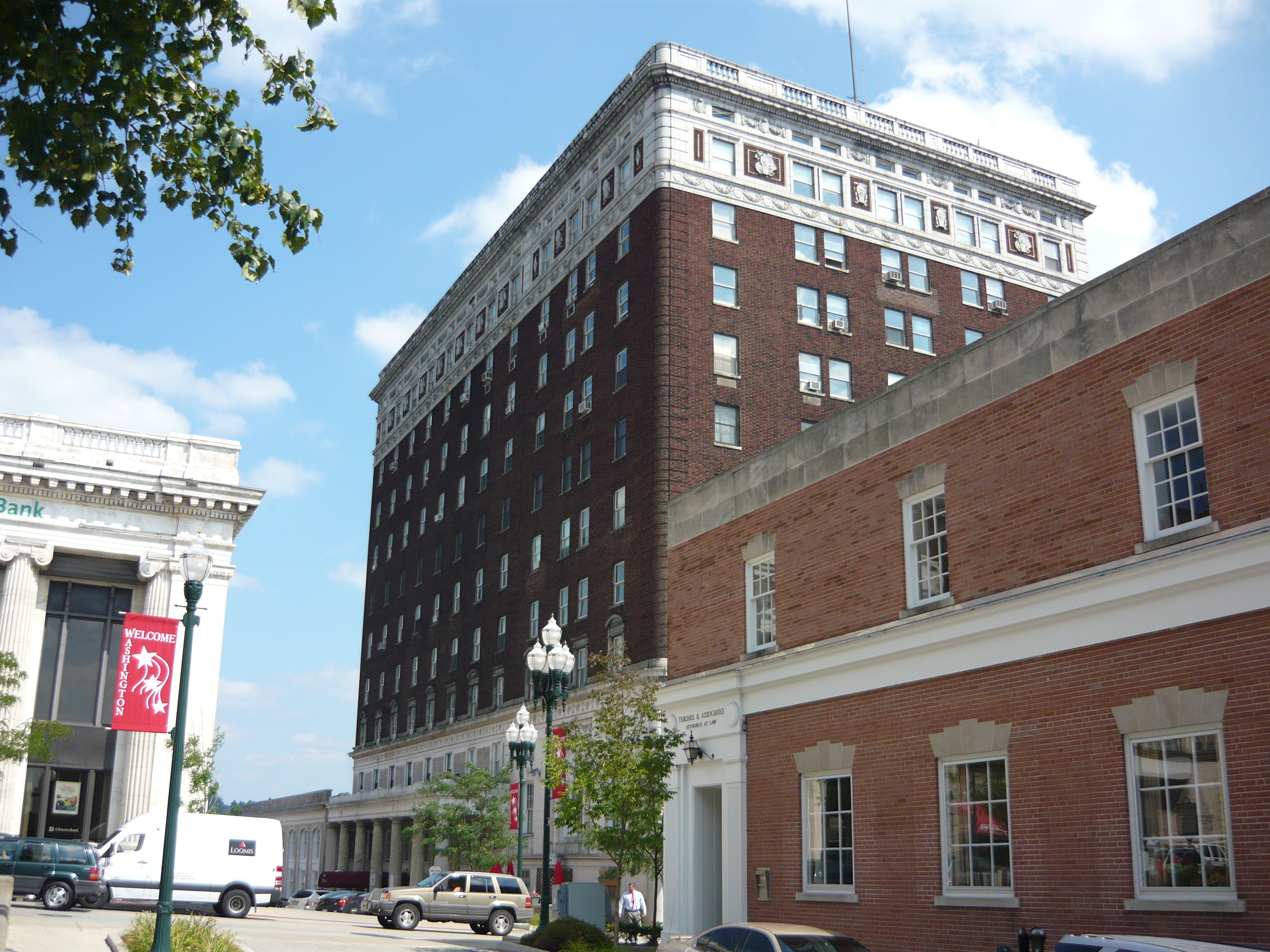

Overview of Washington
Washington is a city in, and the county seat of, Washington County, Pennsylvania, United States. The population was 13,176 at the time of the 2020 census. Part of the Pittsburgh metropolitan area in the southwestern part of the state, the city is home to Washington & Jefferson College and Pony League baseball.
Want to know if a property in Washington is a good investment?
Enter an address to get instant revenue potential and comps.