
Kamas, Utah
Want to see how Kamas compares to other top cities in Utah? Explore all city regulations in Utah. →
C
Kamas, UT
Challenging To Investors
Local STR Agent
Kamas STR Expert
STR Regulations for Kamas, Utah
Overview — Are STRs allowed in Kamas?
- Existing STRs may continue as nonconforming uses if the operator provides evidence of prior established and continuous use within 30 days of the ordinance’s effective date; otherwise, the use is considered abandoned.
- New STR licenses are paused under a moratorium while the city develops longer‑term regulations.
- Operators must obtain a city business license and comply with the municipal transient room tax (TRT) and state tax reporting.
- Bed‑and‑breakfast (B&B) establishments remain allowed under existing rules.
Market Entry — How to start a short‑term rental business in Kamas
- Phase 1 — Determine eligibility
- If you operated an STR in Kamas before adoption of Chapter 15.39 (effective immediately), you may continue as a nonconforming use by applying for a city business license and submitting evidence of prior established and continuous use within 30 days.
- If you do not have prior established use, new STR licenses are currently on hold. Monitor city updates for a future framework (e.g., neighborhood caps, point systems).
- Phase 2 — Compliance setup
- Secure a local point of contact or property manager; municipalities generally cannot require owner residency but may require a local contact.
- Maintain documentation that qualifies as “substantial evidence” of prior use or ongoing operation (see Required documents).
- Prepare for tax filings: municipal TRT and state sales/use tax compliance will be expected as part of licensing and reporting.
- Phase 3 — Licensing
- Apply via the city’s existing business license process, providing the required evidence checklist that staff will publish online.
- Phase 4 — Ongoing operations
- Track enforcement changes, tax remittances, and city announcements while the planning commission and council develop fuller STR rules.
Required documents, permits, licenses, and guidelines
- City business license application (Kamas)
- Evidence of prior established and continuous STR use (examples include:
- Historic listing pages (Airbnb, VRBO, etc.)
- Redacted bank statements or documentation of rental income
- Municipal TRT reports and state tax commission reports, where available)
- Designation of a local contact or property manager
- Confirmation of B&B status if applicable (B&Bs are separately permitted and not subject to the STR moratorium)
- Compliance with municipal TRT and state tax reporting as part of licensing and operations
- Adherence to staff guidance and future regulations as they are adopted
Specific regulations — City (Kamas), County (Summit), and State (Utah)
- Kamas City (Summit County)
- Allowed uses and grandfathering: Existing STRs can continue as nonconforming uses if the operator provides evidence of prior established and continuous use within 30 days; lack of use for more than one year constitutes abandonment.
- Moratorium on new STR licenses: No new licenses are being issued while the city and planning commission develop longer‑term rules.
- Business license requirement: All STR operators claiming grandfathered status must apply for a city business license and submit evidence; staff will post application procedures and an evidence checklist online.
- Enforcement data: The ordinance allows use of municipal TRT and state tax commission reports as additional enforcement data, alongside listing evidence.
- Local manager: The city may require a local point of contact for compliance and response.
- B&B carve‑out: Bed‑and‑breakfast establishments remain allowed under their current rules.
- Development context: Ordinance passed March 11, 2025; staff directed to return with fuller regulatory framework and enforcement details.
- Summit County (unincorporated areas)
- Licensing requirement: Current county rules require business licenses for STRs (Airbnb/VRBO).
- ADU restriction: STRs are effectively banned in accessory dwelling units.
- Enforcement ramp‑up: The county has hired a code enforcement officer and contracted software to improve STR license organization and enforcement; officials will use online listings as evidence to support enforcement actions.
- Rule updates: A county subcommittee is updating STR rules and aims to adopt changes before year‑end. Only a fraction of STRs are currently licensed; enforcement will gather data to inform the final framework.
- Utah State
- House Bill 256 (2025): Municipalities and counties may use online STR listings as evidence that a short‑term rental occurred, provided they have additional supporting information indicating a violation of local ordinances. This strengthens enforcement leverage statewide.
Contact information (local authority in charge of STRs)
- Kamas City Hall
- Address: 126 North澄清 Boulevard (Confusion in source; please verify via the city’s official website)
- Phone: Not provided in the source documents; please call Summit County information or check the city’s website for current details
- Email: Not provided in the source documents; the recorder’s email is not clearly listed in the materials
- Planning/STR inquiries: Contact the City Planner or Planning Commission (staff were directed to publish application procedures and checklists)
- Website: See “Links to source pages”
- Summit County (unincorporated STRs and enforcement)
- Office: Deputy County Manager’s office; Code Enforcement division (recently hired code enforcement officer)
- Email: Not provided in the source documents
- Phone: Not provided in the source documents
- Website: See “Links to source pages”
- STR software/software vendor referenced: Azora Software (county is deploying technology to track and enforce STR licenses)
Links to source pages
- Citizen Portal article — Council adopts short‑term rental ordinance with grandfathering and business‑license requirement (Kamas)
citizenportal.ai/articles/6640213/Kamas/Summit-County/Utah/Council-adopts-shortterm-rental-ordinance-with-grandfathering-and-businesslicense-requirement - KPCW — Summit County may update short‑term rental rules before end of year
www.kpcw.org/summit-county/2025-07-01/summit-county-may-update-short-term-rental-rules-before-end-of-year - Park Record — Kamas aims to buttress informal short‑term rental ban (H.B. 256 context)
www.parkrecord.com/2025/02/06/kamas-works-to-enforce-regulations-and-solidify-short-term-rental-ban - KPCW — Kamas pauses new short‑term rentals, adds tax for guests
www.kpcw.org/summit-county/2025-03-17/kamas-pauses-new-short-term-rentals-adds-tax-for-guests
Note: The Utah state bill text (House Bill 256) is referenced in local coverage; for the definitive bill language and status, consult the Utah Legislature website.
Kamas
Market Saturation Score
High Saturation
8/ 12
months with declining YoY revenue
8–10 declining months: high saturation - supply likely outpacing demand.
Photos of Kamas


Overview of Kamas
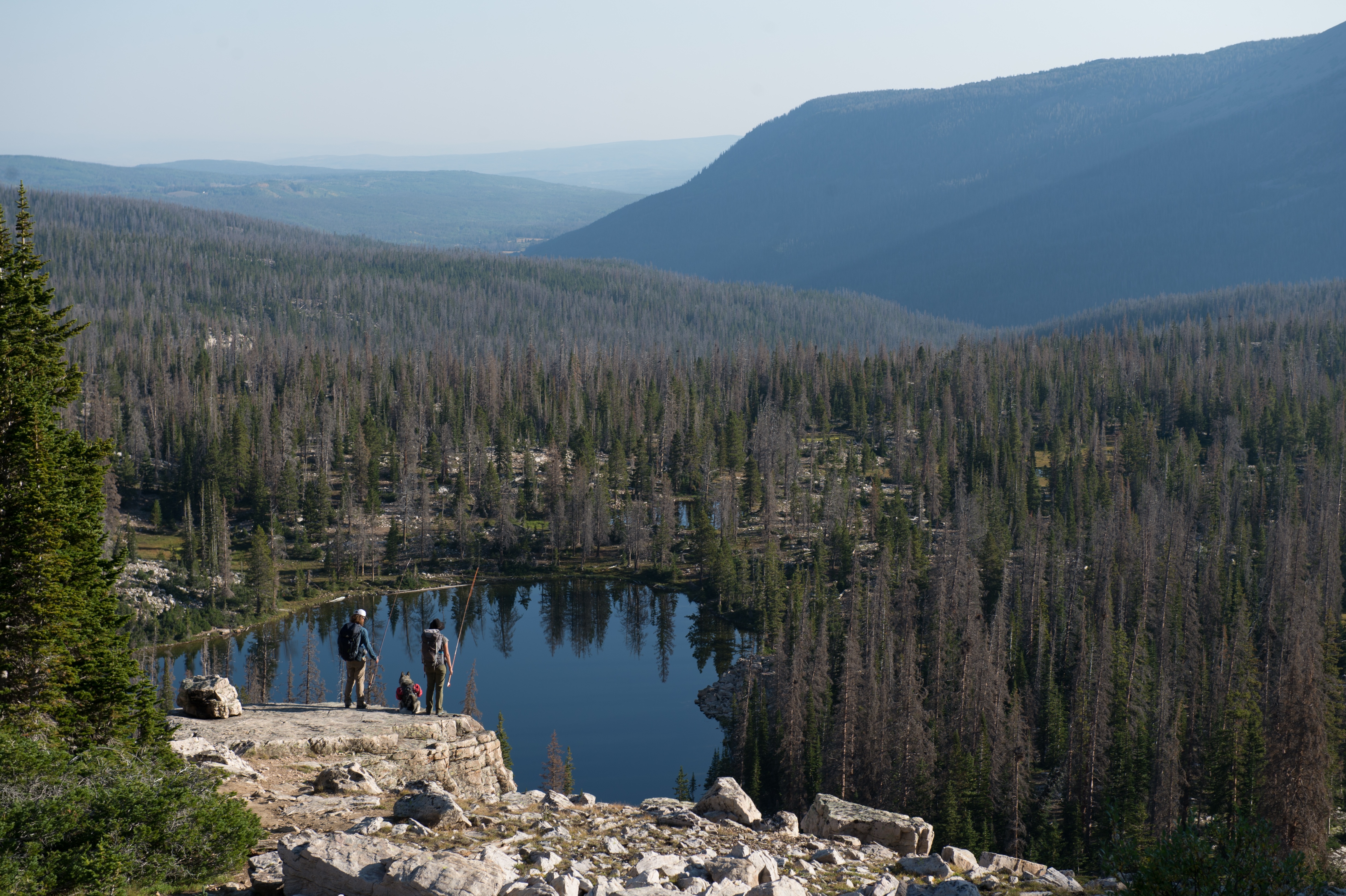
Kamas ( KAM-əs) is a city in southwestern Summit County, Utah, United States. The population was 1,811 at the 2010 census. It is located 42 miles (68 km) east of downtown Salt Lake City. The main industries are cattle ranching and lumber. The town is known as "The Gateway to the Uinta Mountains".
Want to know if a property in Kamas is a good investment?
Enter an address to get instant revenue potential and comps.