
Kingston, Washington
Want to see how Kingston compares to other top cities in Washington? Explore all city regulations in Washington. →
Kingston, WA
Generally Investor Friendly
Local STR Agent
STR Regulations for Kingston, Washington
Important note: Kingston is an unincorporated community within Kitsap County. There is no separate city of Kingston short‑term rental (STR) ordinance or licensing program. All STR operations in Kingston are governed by Kitsap County rules and Washington State statutes (RCW 64.37).
Overview: Are short‑term rentals allowed in Kingston, WA?
Short‑term rentals are allowed in Kingston (Kitsap County), but they are subject to county and state requirements. Kitsap County previously adopted a county‑wide vacation rental code that required conditional use permits for STRs. However, enforcement of that code was deferred in 2019 because it was deemed overly broad and too burdensome, and the county began a structured policy update process to develop clearer, scalable rules. As of the materials provided, county staff were directed to hold interest‑based focus groups and refine concepts aligned with Washington’s HB 1798 (now codified as RCW 64.37). Investors should assume STRs are permissible but must comply with state consumer‑safety, insurance, platform, and tax rules, and prepare for county‑level permitting and oversight that is expected to evolve.
How to start a short‑term rental business in Kingston, WA
- Align your business model with Washington State requirements:
- Confirm liability insurance coverage of at least $1,000,000 primary coverage per property or ensure your booking platform provides equal or greater primary liability coverage.
- Register with the Washington Department of Revenue (DOR) if the platform does not collect and remit lodging/sales/occupancy taxes on your behalf.
- Implement consumer safety measures mandated by state law (contact availability, carbon monoxide compliance, posted emergency and occupancy information, and floor plan with escape routes).
- Anticipate local lodging taxes (Kitsap County’s lodging tax applies to stays fewer than 30 days; see the Department of Revenue Special Hotel/Motel Tax page for current rates and requirements).
- Monitor Kitsap County’s regulatory development:
- The county is crafting updates and has discussed concepts such as registration/licensing, hosting/management standards, neighborhood protections (noise, parking), and complaint/enforcement mechanisms. Be ready to adapt as these concepts become adopted.
- Prepare an operations plan:
- Safety documentation and posting requirements; guest communication procedures; trash, parking, and quiet‑hours rules; shoreline and neighborhood respect policies.
- Vendor and housekeeping standards to mitigate common STR impacts noted by residents (noise, disrespectful guests, shoreline intrusions, parking, trash).
- Maintain compliance records:
- Insurance policy or platform coverage documentation; DOR registration; tax remittance records; guest communications and safety postings; listing URLs.
Required documents, permits, licenses, and guidelines
- Washington State requirements (apply regardless of county):
- Liability insurance of not less than $1,000,000 in primary coverage per short‑term rental transaction, or booking through a platform that provides equal or greater coverage (RCW 64.37.050).
- Consumer safety compliance: contact information for operator/designated contact during stay; carbon monoxide alarm compliance per RCW 19.27.530 and State Building Code Council rules; conspicuous postings inside the STR unit with street address, emergency contact information, floor plan with exits, maximum occupancy, and operator contact (RCW 64.37.030).
- Platform registration and consumer notices: if you list on platforms (Airbnb, VRBO, etc.), the platform must be registered with DOR and must inform operators of tax obligations, safety requirements, and potential insurance limitations (RCW 64.37.040).
- Taxes and registration: remit applicable local/state lodging, sales, occupancy, and other taxes or ensure the platform does so on your behalf (RCW 64.37.020). If you operate without a platform, you must register with DOR to report and remit lodging taxes.
- Kitsap County requirements (developing):
- Background: a vacation rental code that required conditional use permits was adopted in 2016 but enforcement was deferred (2019) due to burden and enforceability concerns. The county is now updating STR policy through an engagement process.
- Expect future county requirements to include elements such as: registration/licensing; on‑site or responsive host management; neighborhood impact controls (noise, parking, trash); shoreline and property protections; and complaint/enforcement processes.
- Lodging tax specifics:
- In Washington, lodging taxes (often called hotel/motel taxes) apply to lodging provided for fewer than 30 days. Kitsap County has a lodging tax, and STRs are subject to it. The Washington Department of Revenue publishes Special Hotel/Motel Tax information and county rates. Operators must either remit lodging taxes directly to DOR or rely on a platform that collects/remits on their behalf.
Note on licensing clarity: The Kitsap County Board of Commissioners (BOCC) materials do not confirm a final county registration or permit program for STRs yet. Staff were directed to hold focus groups and advance concepts consistent with state law. Investors should watch for new county ordinances or permitting updates.
Specific regulations for short‑term rentals (Kingston/Kitsap/Washington)
- State of Washington (RCW 64.37):
- Definition: Short‑term rental means a lodging use (not a hotel/motel/bed‑breakfast) in a dwelling unit, or portion thereof, offered for fewer than 30 consecutive nights (excludes certain owner‑occupied situations, long‑term stays ≥30 nights, and certain charitable housing operations).
- Consumer safety: Must provide operator contact to guests during their stay; must comply with CO alarm rules; must post address, emergency contacts, floor plan/exits, max occupancy, and operator contact in the unit.
- Liability insurance: Maintain primary liability insurance coverage of at least $1,000,000 aggregate per STR, or use a platform providing equal/greater coverage.
- Platform obligations: Platforms must register with the department; inform operators of tax obligations and safety requirements; and inform operators that personal homeowner’s insurance may not cover STR incidents.
- Taxes: Operators must remit applicable local, state, and federal taxes (lodging/occupancy/sales) unless the platform does so.
- Kitsap County:
- Historical code required conditional use permits for STRs; enforcement deferred in 2019 pending a policy update.
- County’s engagement indicates future rules are likely to be scalable by STR type, straightforward in permitting, and focused on consumer protection, safety, and minimizing community impacts (noise, shoreline/parking intrusions, trash, safety).
- Kingston community context:
- Kingston is within Kitsap County’s jurisdiction. While not a separate municipality with its own STR code, Kingston stakeholders participated in county outreach. Survey findings from county engagement highlight resident concerns about noise, neighborhood character, shoreline intrusions, parking, safety, host responsiveness, and trash. Any future county ordinances should be expected to address these topics.
Contact information (local authority for STRs)
- Kitsap County Board of Commissioners—Short‑Term Rental Project:
- Phone: 360.337.5777
- Email: help@kitsap1.com
- Mailing Address: Kitsap County Board of Commissioners—STR Project, 614 Division St, MS‑7, Port Orchard, WA 98366
- Washington Department of Revenue (DOR)—Business registration and lodging tax information:
- Website: dor.wa.gov/
- Special Hotel/Motel Tax resources and county rates: dor.wa.gov/find-tax-rates/other-taxes/special-hotelmotel-tax
- Washington State Legislature—Short‑Term Rentals (RCW 64.37):
Links to source pages
- Kitsap County Board of Commissioners: Short‑Term Rental Policy Development and Public Outreach page — www.kitsap.gov/BOC_p/Pages/STR.aspx
- RCW 64.37 — Washington State Short‑Term Rentals — app.leg.wa.gov/RCW/default.aspx?cite=64.37
- Washington Department of Revenue — Special Hotel/Motel Tax (county lodging tax rates and compliance) — dor.wa.gov/find-tax-rates/other-taxes/special-hotelmotel-tax
Practical guidance: Operate now under RCW 64.37 and state lodging tax rules; confirm insurance and safety compliance; and watch the Kitsap County STR page for final county permit/registration requirements, focus group outcomes, and adopted ordinances.
Kingston
Market Saturation Score
Photos of Kingston

Overview of Kingston
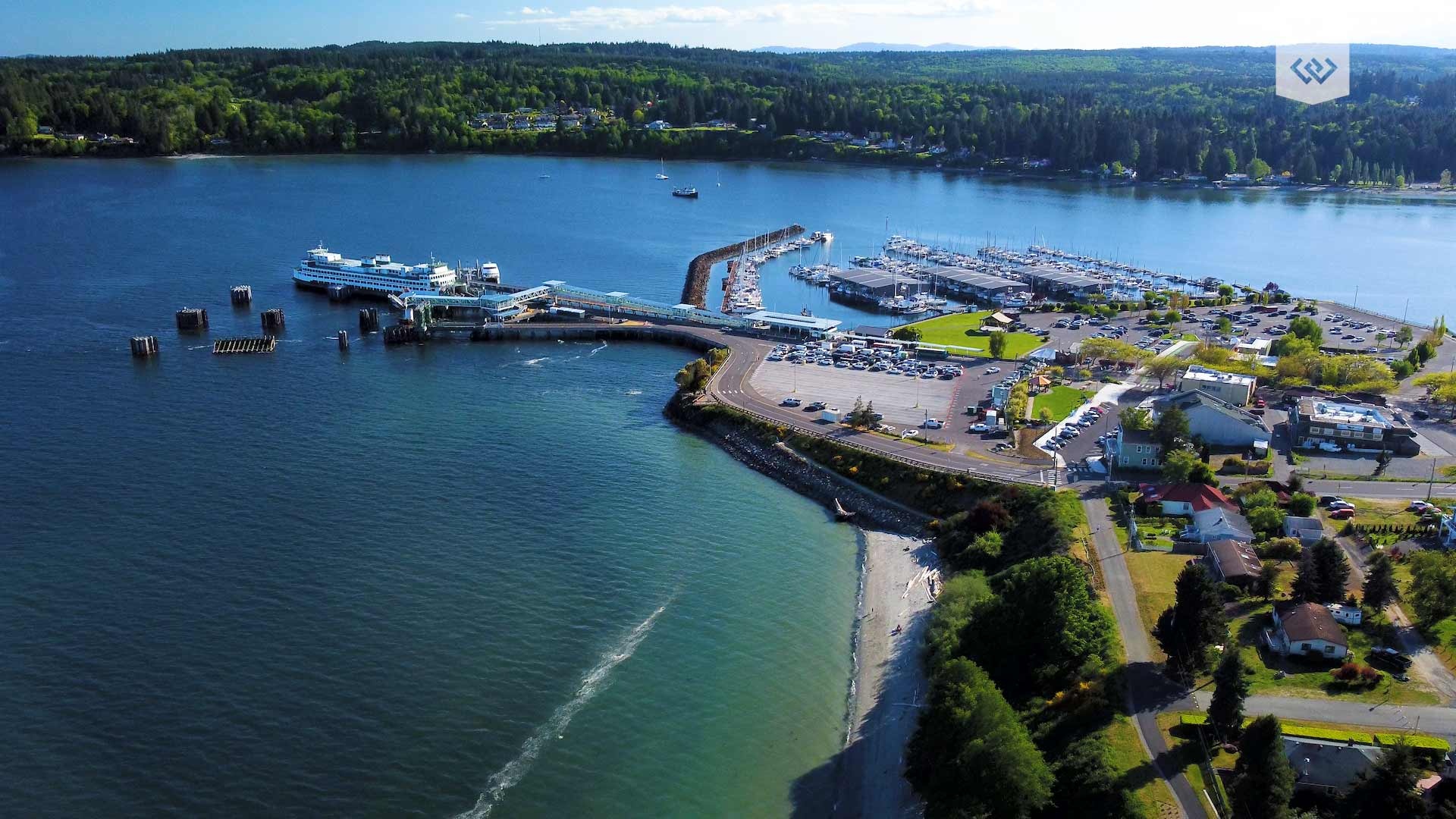
Kingston (formerly Appletree Cove) is an unincorporated community and census-designated place (CDP) in Kitsap County, Washington, United States. The population was 2,099 at the 2010 census. Kingston is along the shores of Appletree Cove and Puget Sound, and is home to a major Washington State Ferry terminal linking it to Edmonds.
Want to know if a property in Kingston is a good investment?
Enter an address to get instant revenue potential and comps.